
Reviews
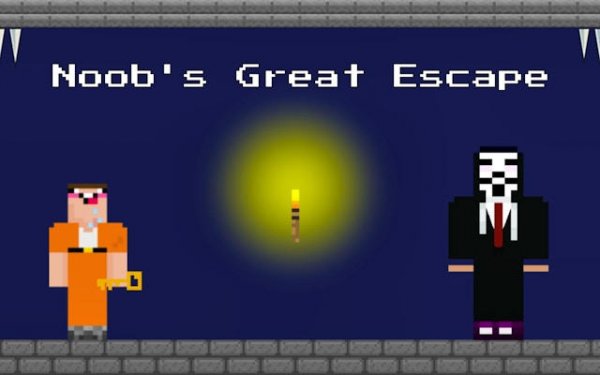
Noob's Puzzle Escape Adventure targets players who enjoy brain teasers without pressure. Its strength lies in the room-by-room structure: each puzzle stands alone, so you can stop and return without losing progress or momentum. The absence of time limits makes experimentation feel safe, and the gradual introduction of new mechanics keeps later rooms from feeling repetitive. The main limitation visible in the source is that it focuses purely on puzzle solving, so anyone seeking action or speed-based challenges will not find that here. It suits all ages and runs in a browser without installation.
Description
Room-by-Room Puzzle Design
Each room in Noob's Puzzle Escape Adventure functions as a standalone puzzle. The goal never changes: find a way for Noob to leave. What changes is how you get there. Early rooms keep the solution visible and simple, while later ones layer multiple steps together. You might need to find a key, use it on a lock, then push a block to reach a higher area. The game introduces new mechanics gradually, so each addition builds on what you already understand rather than arriving all at once.
How Interaction Works
Players use a mouse or touchscreen. Clicking picks up objects, dragging places them where they belong, and activating switches or buttons opens doors or moves platforms. Combining items in logical ways is often required. Clues tend to sit in plain sight, which means the challenge is usually about noticing what is already there rather than finding something hidden. There is no time pressure, so you can experiment freely and learn from actions that do not work.
Pacing and Accessibility
Noob's Puzzle Escape Adventure has no time limits. That design choice matters because it shifts the focus entirely onto observation and logical thinking instead of reflexes or speed. The interface is kept clean and intuitive, which suits players of all ages. Because the game runs directly in a web browser, there is nothing to download or install. The difficulty curve rises steadily, but the relaxed structure means you can stop and think through any room at your own pace.
Approaching a Stuck Puzzle
When a room resists a solution, the most useful habit is to observe before acting. Look for patterns, misplaced objects, or environmental clues that hint at a sequence. Trial and error is a normal part of the process here, not a failure state. If a combination does not work, the game gives you room to try another. Taking a short break and returning with fresh eyes often reveals a detail you walked past. Regular play builds logical reasoning over time.
Compatibility
FAQ
Comments
Sign in to comment
You must be logged in before posting a review or rating.
No comments yet. Be the first to comment!





Editorial Notes