
Reviews
Kogama Christmas Parkour Runner combines precise parkour mechanics with a cheerful Christmas setting. The icy surfaces and decorated obstacle courses demand careful movement rather than raw speed, and the multiplayer mode adds a competitive layer that encourages learning from other players. It suits those who enjoy skill-based platforming and seasonal fun, though the challenge may frustrate players who prefer a more forgiving pace.
Description
Course Design and Holiday Setting
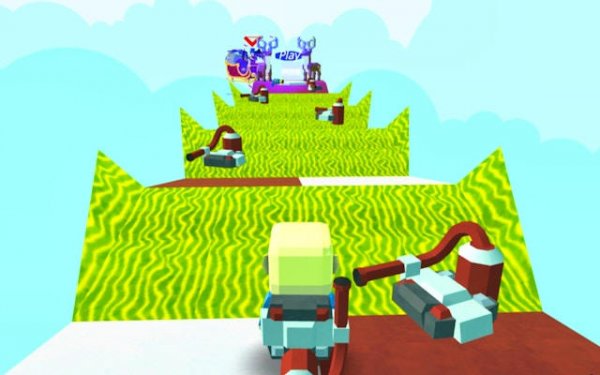
Kogama Christmas Parkour Runner places players in a snowy 3D Christmas world where each course is built from decorated platforms, icy surfaces, and holiday-themed obstacles. The visual theme is not just cosmetic: icy ground changes how movement feels, demanding controlled inputs rather than constant speed. Courses are laid out to test jumping, climbing, and balancing, with gaps and elevated sections that require you to read the environment before committing to a move.
Movement, Jumping, and Icy Surfaces
You control your character with standard keyboard and mouse inputs. Movement keys handle walking and running, while the mouse adjusts your viewpoint so you can scout upcoming platforms and gaps. Jumping is the core action for clearing obstacles, and some games of this type include a double jump for reaching higher areas or crossing wider distances. On icy surfaces, momentum and reduced friction make precise timing more important than raw speed, so short, deliberate inputs often work better than holding a direction.
Solo Practice and Multiplayer Competition
The game supports both solo practice and global multiplayer competition. In solo mode, you can repeat course sections to memorize platform locations and timing without pressure. In multiplayer, you compete against players worldwide, which adds a social layer and a chance to observe different routes and techniques. Watching how others approach a tricky jump or an icy stretch can reveal shortcuts or safer paths you might not have considered.
Building Consistency on Hard Courses
Progress depends on learning each course's layout and timing your actions carefully. Start by focusing on controlled, precise movements rather than speed, especially where ice reduces traction. Use the double jump strategically to reach distant platforms, and treat each failure as information about where your timing was off. If frustration builds, stepping away for a moment often helps more than repeating the same mistake. As familiarity grows, you can gradually increase your speed while keeping your inputs clean.
Compatibility
FAQ
Comments
Sign in to comment
You must be logged in before posting a review or rating.
No comments yet. Be the first to comment!




Editorial Notes