
Reviews
Orb Hopping Star Collection strips the arcade puzzle down to one idea: you control horizontal movement while the orb bounces on its own. That constraint makes every star placement a timing problem, and the three-star requirement encourages planning rather than reflex alone. The gradual difficulty curve and absence of timers or score gates make it approachable for casual players who prefer steady progress. The main limitation is variety—the input describes no additional modes, power-ups, or visual themes, so the experience rests entirely on the core bouncing and collecting loop.
Description
The Bouncing Orb and Its Controls
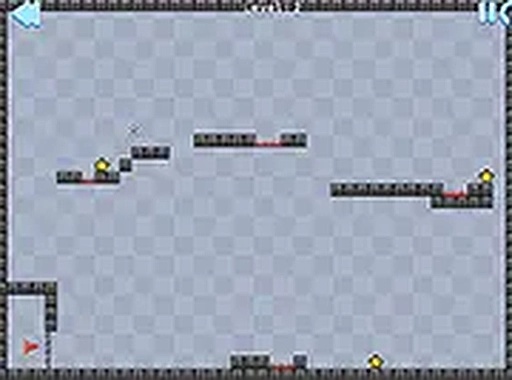
The orb moves vertically on its own, rising and falling in a steady rhythm. You influence only its horizontal position, using keyboard arrows or mouse clicks. This split between automatic vertical motion and manual horizontal steering defines every stage. Because the bounce pattern never changes, you can watch the orb for a moment and predict exactly where it will be, then plan when to move sideways. The challenge comes from acting at the right moment, not from memorizing complex button combinations.
Collecting Three Stars Per Stage
Every stage places three stars at different heights and lateral positions. Your task is to steer the orb into each one. Stars remain visible after collection, but the stage only clears once all three are gathered. That rule changes how you approach a layout: collecting in the wrong order can make the remaining stars harder to reach. Before moving, it helps to note the relative positions of all three stars and decide a collection sequence that keeps the orb's horizontal travel manageable.
Progression and Stage Unlocking
Collecting all three stars breaks the chain holding them, which opens the next stage. There is no minimum score, no time limit, and no requirement to replay a stage for a better result. Progression is strictly sequential: clear one stage to advance to the next. This makes the game suitable for short sessions, since you can complete a single stage and stop, or continue through several stages in one sitting without pressure.
Difficulty Curve and Visual Design
Early stages use straightforward star placements that let you learn the bounce rhythm. Later stages arrange stars at trickier angles, demanding more precise timing to reach them. The increase is gradual, so skills build without sudden spikes. The interface stays clean, with the play area filling most of the screen. A full-screen mode is available if you want a larger view of star placements. Graphics are simple and functional, keeping attention on the orb and the stars.
Compatibility
FAQ
Comments
Sign in to comment
You must be logged in before posting a review or rating.
No comments yet. Be the first to comment!


Editorial Notes