
Reviews
Four in a Row Tactics captures the essence of the well-known pen-and-paper game in a clean digital format. Its strength lies in the balance between accessibility and strategic depth: the rules take seconds to learn, but the center-column control and multi-move planning give experienced players plenty to think about. The lack of a timer respects different play styles, and the family-friendly design makes it a reliable choice for shared screen time. The main limitation is the absence of detailed information about AI difficulty or online multiplayer, but the core two-player experience remains solid.
Description
Dropping Discs, Building Lines
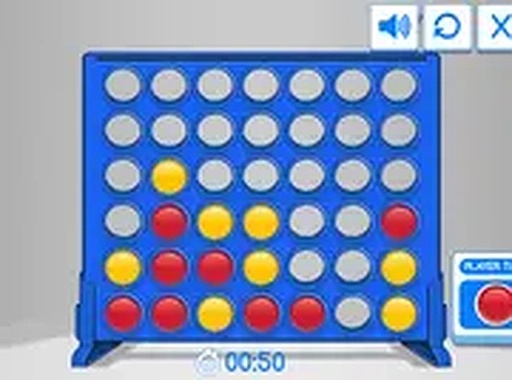
Four in a Row Tactics is a two-player board game played on a vertical grid with seven columns and six rows. Each turn, a player selects a column and drops one of their colored discs. The disc falls to the lowest empty space, stacking from the bottom up. The objective is to connect four of your own discs in a straight line—horizontally, vertically, or diagonally. If the grid fills without a winner, the round ends in a draw.
Balancing Offense and Defense
Every move serves two purposes: building your own lines and blocking your opponent's. Placing a disc to interrupt a potential four is as critical as setting up your own winning pattern. The center columns are particularly valuable because they offer more opportunities to create lines in multiple directions. Experienced players look several moves ahead, anticipating responses and setting traps that force opponents into difficult choices.
Clean Design, Clear Play
The board uses a clean, uncluttered layout that keeps attention on the discs. Each disc is distinctly colored, making it easy to track the state of play at a glance. The interface is intuitive: a simple tap or click on a column drops the disc. There is no timer, so players can think at their own pace, whether for a quick match or a longer, more thoughtful session.
For Families and Friends
The straightforward rules are easy for young children to grasp, while the underlying strategy keeps older players engaged. It works well for family game nights, short breaks, or friendly competitions. The turn-based format encourages conversation and shared excitement as each move unfolds. Many versions allow two players to share one device, passing the screen back and forth, and some include an AI opponent with adjustable difficulty for solo practice.
Compatibility
FAQ
Comments
Sign in to comment
You must be logged in before posting a review or rating.
No comments yet. Be the first to comment!








Editorial Notes