
Reviews
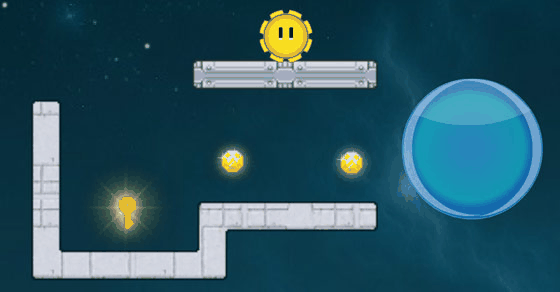
Gravity Shifter: Maze Runner builds its puzzles around a single strong idea: rotate the world to move the character. That mechanic turns every maze into a test of anticipation, since a quick spin can cause a tumble into hazards while a slow turn opens safer routes. The gradual difficulty curve and absence of timers make it welcoming for casual players and younger audiences. The main limitation is that the concept may feel repetitive for those seeking fast-paced action.
Description
Rotating the World to Move
In Gravity Shifter: Maze Runner, the player does not directly steer the character. Instead, rotating the entire screen changes the direction of gravity, causing the character to roll accordingly. Moving left, right, up, or down depends entirely on how the world is tilted. This makes the environment itself the controller. A quick spin can send the character tumbling into a hazard, while a slow, deliberate turn can open a safer route. The mechanic feels intuitive from the first level but gains depth as mazes grow more complex.
Maze Layouts and Obstacles
Each maze is a crafted layout of walls, gaps, and traps that test how well the player anticipates the effects of a gravity shift. Some sections require precise timing, while others demand a longer sequence of rotations to reach the exit. Early levels introduce the basics of rotation and movement. Later stages combine multiple obstacles in tight spaces, pushing players to plan several steps ahead. Trying a different rotation can reveal hidden passages or safer routes, so experimentation is part of the design.
Visual Clarity and Controls
Bright, clean colors make each maze easy to read at a glance. Characters and obstacles are clearly defined, so attention stays on solving puzzles rather than parsing visual clutter. The interface is minimal, and controls respond smoothly to mouse clicks or touch inputs. There are no complex menus or distracting elements. This approachable presentation suits a wide audience, including younger players and those new to puzzle games.
Progression and Pacing
New ideas appear at a steady pace, with each set of levels building on skills learned earlier. The difficulty increases gradually, giving players time to master the rotation mechanic before facing more intricate puzzles. There are no timers or pressure, so players can take as long as needed to observe and plan. This relaxed structure supports both short play sessions and longer, focused puzzle-solving.
Compatibility
FAQ
Comments
Sign in to comment
You must be logged in before posting a review or rating.
No comments yet. Be the first to comment!






Editorial Notes