
Reviews
Cubic Realm: Narrative & Precision Trials is built around two low-pressure activities: a choice-driven story campaign and a target-hitting precision mode. The narrative rewards replaying to see how decisions change outcomes, while precision mode offers unlockable environments for steady aim. The blocky, bright aesthetic and minimal controls suit younger players or anyone seeking a calm, no-fail experience. The main limitation is that the input does not detail story length, number of branches, or target variety, so depth is unclear.
Description
Two Modes, Two Rhythms
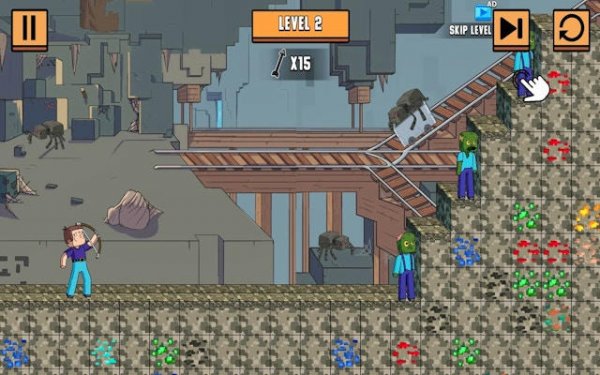
Cubic Realm: Narrative & Precision Trials splits its play into two clearly separated activities. The narrative campaign follows a lighthearted story where each scenario presents choices that redirect the plot. The precision mode strips away story and asks players to hit floating targets using harmless tools, scoring points for accuracy and timing. Neither mode pressures the player with timers or fail conditions, so switching between them feels like changing the pace of a walk rather than changing games.
How Choices Shape the Campaign
In the narrative campaign, decisions are the main mechanic. Every scenario offers options, and picking one alters what happens next. Because branches diverge rather than merely reorder events, replaying with different choices reveals story fragments that were missed the first time. The tone stays gentle throughout — interactions matter more than conflict, and the blocky characters and creatures are drawn to look friendly rather than threatening. This makes the campaign approachable for younger players while still giving older ones a reason to revisit scenes.
Precision Mode and Its Unlockables
Precision mode replaces narrative choice with hand-eye coordination. Targets float across varied blocky landscapes, and players aim with basic mouse or touch input. Each successful hit adds to a running tally, and reaching certain milestones unlocks additional themed environments. There is no time limit and no penalty for missing, so the mode rewards patience and steady aim rather than speed. The unlock structure gives a concrete goal to work toward without turning the activity into a test.
Visual Style and Accessibility
The game uses bright colors, simple geometric shapes, and a toy-like blocky aesthetic. Backgrounds range from sunny fields to cozy indoor settings, each with its own soft palette. Controls are intentionally minimal — basic mouse or touch inputs only — and each mode includes a brief tutorial that explains the core actions without overwhelming new players. Menus are clearly labeled and uncluttered, keeping attention on the gameplay itself. The overall design supports short sessions or longer relaxed play depending on the player's mood.
Compatibility
FAQ
Comments
Sign in to comment
You must be logged in before posting a review or rating.
No comments yet. Be the first to comment!







Editorial Notes