
Reviews
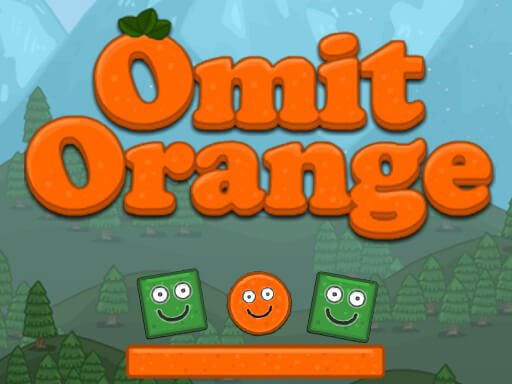
Orange Clear Logic Puzzle stands out by giving every tile its own gravity direction, which transforms a simple clear-the-board task into a forecasting exercise. The lack of timers and scores keeps the tone relaxed, while the green-square constraint ensures that careless moves have real consequences. It suits players who enjoy spatial reasoning and gradual difficulty curves. The main limitation is that the input does not confirm hint or undo systems, so trial and error may be the primary recovery method.
Description
Gravity Arrows Change Everything
Most tile-clearing puzzles treat the board as static. Orange Clear Logic Puzzle does not. Every square—orange or green—displays a directional arrow that determines how it moves when adjacent squares disappear. Remove one orange tile and the remaining pieces may slide, fall, or drop off the board according to their individual arrows. That single rule turns each tap into a small physics event with consequences you need to predict before committing.
Your Goal and Your Constraint
The objective is straightforward: eliminate all orange squares. The constraint is what makes it a logic test. Green squares must stay on the board. If a green tile falls off or gets removed because of a chain reaction you set in motion, the puzzle is failed. You cannot simply clear tiles in any order. You have to read the arrows, trace how each removal shifts neighboring pieces, and find a sequence that empties the board of orange without endangering green.
Planning Over Reflexes
There are no timers and no scoring pressure. The game gives you as long as you need to study the layout before your first tap. That design choice shifts the challenge entirely onto observation and foresight. Multiple solutions often exist for a single board, so experimentation is part of the process rather than a sign of failure. If one removal order traps a green square, you can try a different sequence. The game rewards patience, not speed.
Accessible Controls, Gradual Challenge
Interaction is limited to tapping or clicking an orange square to remove it. That simplicity works on desktop and mobile alike, and it keeps the focus on the puzzle rather than the interface. Difficulty rises gradually across the levels, introducing more complex arrow arrangements and tighter constraints as you progress. The clean, colorful presentation stays family-friendly throughout, and the absence of time limits makes it suitable for short breaks or longer sessions.
Compatibility
FAQ
Comments
Sign in to comment
You must be logged in before posting a review or rating.
No comments yet. Be the first to comment!







Editorial Notes