
Reviews
Unicorn Puzzle for Children keeps its scope narrow on purpose. Six unicorn-themed scenes, drag-and-drop controls, and no timers or scores make it easy for a preschooler to pick up without instruction. The main limitation is variety: the core loop never changes, so older or more experienced players may outgrow it quickly. For parents seeking quiet, ad-free screen time that reinforces fine motor skills and pattern recognition, the design fits the audience well.
Description
What Players Actually Do
Each session begins on a simple main menu where a child picks one of six available puzzles. Every puzzle presents the same core task: a set of scrambled pieces sits on the screen, and the player drags each piece with a finger or mouse onto its matching spot on the puzzle board. There is no timer, no score counter, and no penalty for placing a piece in the wrong spot. The game responds with gentle positive reinforcement when pieces land correctly, which gives young players a clear signal that they are on the right track without adding pressure.
Why the Six Scenes Matter
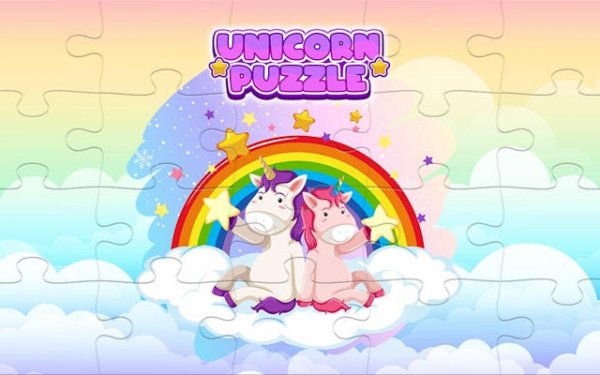
The six puzzles are built around unicorn-themed artwork set in magical landscapes. Because each puzzle is a distinct scene rather than a variation of the same image, children get a fresh visual goal every time they finish one. That variety is the main reason the game can hold attention across multiple sessions, since completing a scene naturally leads to curiosity about the next one. The artwork is described as vibrant and child-friendly, which keeps the focus on recognizable shapes and colors rather than fine detail that could frustrate younger players.
How Difficulty Is Handled
Difficulty is not selected through a menu. Instead, it comes from the puzzles themselves, and the input notes that children do best when they start with puzzles that have larger, simpler pieces. This suggests the six scenes vary in piece size or complexity, letting a child move from easier boards to harder ones at their own pace. The absence of time limits is central to this design: a child can pause, study a piece, and try again without losing progress or being rushed by a countdown.
Skills the Game Quietly Builds
Dragging pieces into place exercises fine motor coordination, while matching shapes and colors to the board reinforces pattern recognition. Solving a full scene requires the child to hold a goal in mind and work through it step by step, which is the same problem-solving loop found in physical jigsaw puzzles. Because the game removes scores and timers, the feedback loop stays focused on completion rather than performance, which suits very young children who are still learning to persist with a task.
What Parents Should Know
The game is described as a safe, ad-free space, meaning play is not interrupted by pop-ups or external links. There is no mention of in-app purchases, accounts, or online features, so the experience appears to be entirely offline and self-contained. Regular short sessions tend to work better than long ones for this age group, and celebrating each finished puzzle gives children a sense of accomplishment that encourages them to return to the next scene.
Compatibility
FAQ
Comments
Sign in to comment
You must be logged in before posting a review or rating.
No comments yet. Be the first to comment!







Editorial Notes