
Reviews
Team Parkour: Block Builder Course stands out by making block placement a shared resource rather than a solo tool. Teams must coordinate jumps, decide when to build, and regroup at checkpoints. The gradual difficulty curve and mini-games add structure without overwhelming new players. Its bright, minimal visuals keep the focus on teamwork. The main limitation is that the input does not clarify multiplayer scope or exact block counts, so players seeking those details should verify before buying.
Description
Shared Progress, Shared Blocks
Team Parkour: Block Builder Course is built around group coordination rather than solo speed. Each player carries a limited number of blocks that can be placed during a course. A bridge across a gap might be built by one player while another crosses, then the builder follows. Because blocks are finite, teams must decide when to spend them and when to save them for a harder section later.
Course Layout and Difficulty
Courses are made of interconnected platforms, gaps, and vertical sections. Some areas require precise jumps, while others call for creative use of the block tool. Checkpoints appear at natural resting points so the team can regroup after a tough stretch. Difficulty rises gradually, introducing new combinations of obstacles that test both timing and teamwork.
Visual Clarity for All Ages
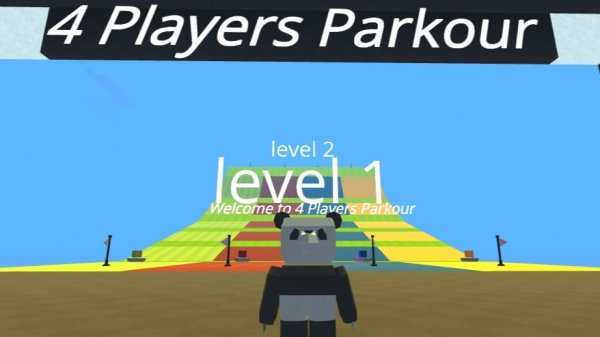
Bright, saturated colors and simple geometric shapes keep the course readable. Characters are small and expressive, with clear animations for actions like jumping or placing a block. Minimal backgrounds keep attention on the route ahead. This clean design helps players of any age track their character and teammates without visual clutter.
Mini-Games and Practice
Beyond the main courses, the game includes shorter mini-games that focus on specific skills such as speed running or precise block placement. These activities let players practice mechanics without the pressure of a full course. They also work as a warm-up for new players or a change of pace for experienced teams.
Compatibility
FAQ
Comments
Sign in to comment
You must be logged in before posting a review or rating.
No comments yet. Be the first to comment!







Editorial Notes