
Reviews
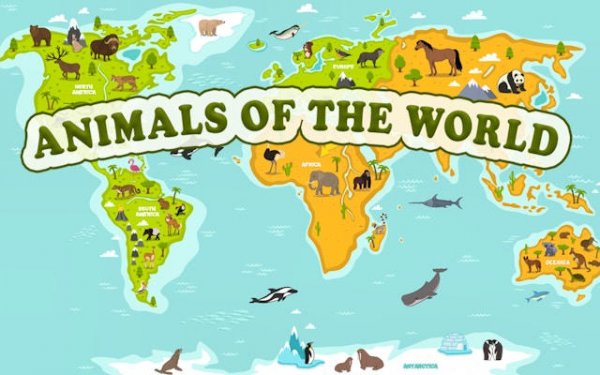
Global Wildlife Explorer for Kids works best as a gentle introduction to geography and animal habitats. The world map doubles as the menu, habitats hide animals to find, and fact cards reward each discovery with simple facts and optional audio. The lack of timers, scores, and advertisements supports independent use by young children. The main limitation is that the input does not specify how many continents, habitats, or species are included, so the depth of content cannot be judged from the description alone.
Description
Choosing a Continent
Global Wildlife Explorer for Kids starts with a colorful world map. Players select a continent, and the game opens a set of environments tied to that region. Labels and friendly icons show where the player is, so basic geography stays part of the experience without becoming a separate lesson. The map is the main menu, which means children learn the shape and position of continents simply by navigating between them.
Searching Habitats for Animals
Inside each continent, habitats such as forests, grasslands, and coastal areas appear as clickable locations. Selecting one reveals the animals that live there. This structure teaches an early ecology idea: different species belong to different environments. The game expects repeated visits to a region, because not every animal is found on the first pass. Children compare what they have already spotted with what is still missing, which turns simple clicking into a light search task.
Fact Cards and Reading Support
Finding a new animal triggers a fact card with straightforward details about the species: what it eats, where it sleeps, and what makes it distinctive. The language is written for young readers. Some cards include audio narration, which helps children who are still building reading confidence follow the information independently. The cards act as the game's reward, replacing points or trophies with knowledge about the animal just discovered.
Saved Progress Without Pressure
A visual tracker shows which animals have been found and which remain hidden, and the game saves progress automatically so exploration can continue across sessions. There are no time limits and no scores. That design choice keeps attention on learning and lets children set their own small goals, such as finishing one continent before moving to the next. Large buttons and simple navigation support independent use at home or in a classroom, and the absence of advertisements, external links, or other distractions removes common supervision concerns.
Compatibility
FAQ
Comments
Sign in to comment
You must be logged in before posting a review or rating.
No comments yet. Be the first to comment!


Editorial Notes