

Reviews
Happy Farm Crossing Arcade works best as a short-burst arcade game. The one-tap control and clear goal of catching chickens while dodging traffic make it immediately understandable, and the rising speed gives each run a natural difficulty arc. Its main limitation is variety: the loop stays the same, so players who want evolving objectives may lose interest. It suits casual players and families looking for a light reflex challenge.
Description
Chasing Chickens Across Traffic
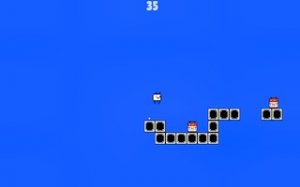
Happy Farm Crossing Arcade puts you in control of a farmer whose day revolves around two tasks: catching runaway chickens and gathering eggs. The farm is bisected by a busy road, and every crossing carries risk. Chickens scatter, eggs appear along the route, and vehicles move with enough speed to end a run if you mistime a step. The game uses a tap or click input to move the farmer forward, so the challenge comes from reading traffic patterns and reacting before a gap closes. [IMG_1]
Why the Pace Keeps Rising
Each successful catch and egg collection feeds into a score that climbs as long as you stay alive. The game responds by gradually increasing speed, which changes how much time you have to judge each lane. Early on, gaps between cars are forgiving; later, the farmer must commit to smaller windows. That shift turns a simple premise into a test of timing and calm decision-making. Because there is no set ending, a run lasts exactly as long as your reflexes hold out. [IMG_2]
Built for Quick Sessions
The farm theme is bright and uncluttered, and the controls never expand beyond a single tap. That makes the game approachable for younger players or anyone who wants a short arcade break. There is no story to follow and no complex menu to learn. The trade-off is that depth comes entirely from the speed curve and your own score-chasing, so players who want varied objectives may find the loop repetitive after a while.
Compatibility
FAQ
Comments
Sign in to comment
You must be logged in before posting a review or rating.
No comments yet. Be the first to comment!









Editorial Notes