
Reviews
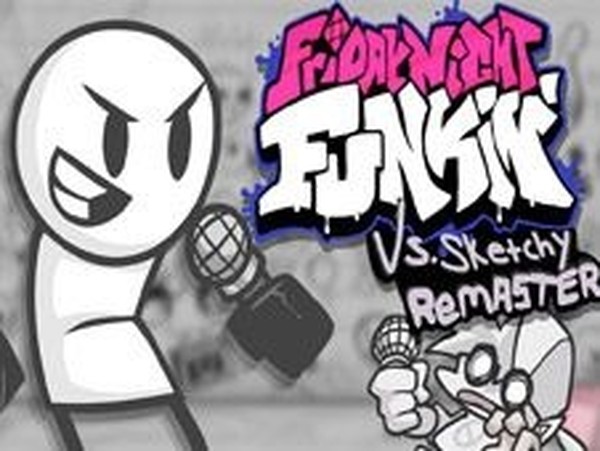
Sketchy Remastered keeps its scope tight: three original songs, arrow-key note matching, and a stickman opponent named Sketchy. The remastered graphics and audio improve readability, which matters when timing is everything. Multiple difficulty levels and a free play mode make it approachable for newcomers, while the consecutive-miss failure rule keeps runs tense. The small song count limits long-term variety, but it also encourages mastering each track. Best suited to players who enjoy short, repeatable rhythm challenges.
Description
Note-Matching Against Sketchy
Sketchy Remastered is a rhythm-based arcade game built around a direct duel: you versus a stickman named Sketchy. The objective is straightforward—perform better than your opponent by hitting notes in time with the beat. Arrow prompts appear above your character's head, and you respond with the matching keyboard key. Miss too many consecutive notes and the round ends, forcing a restart. That failure condition makes accuracy more important than speed alone; a single sloppy section can undo an otherwise clean run.
Keyboard Controls and Timing
The game uses the four arrow keys: up, down, left, and right. When an arrow symbol appears above your character, press the corresponding key at the right moment. Timing is measured against the music, not just the visuals, so players who internalize the beat tend to anticipate prompts rather than react to them. This remastered version improves graphics and audio over the original, which matters in a genre where visual clarity and audio sync directly affect how readable each pattern is.
Three Songs, Distinct Rhythms
Sketchy Remastered includes three original songs—Line Art, Sketched Out, and Rip and Tear—each with its own rhythm and challenge. Because the track list is small, each song carries more weight; learning one thoroughly is part of the intended experience. Multiple difficulty levels let you start with easier patterns and work up to more complex rhythms, so the same three tracks can support very different skill levels without requiring new content.
Modes and Practice Approach
Story mode and free play mode serve different purposes. Story mode frames the stickman battle and gives each attempt stakes, while free play lets you rehearse a specific song without the pressure of progression. If a track keeps ending your run, free play is the practical place to isolate it. The game is open-source and developed by a dedicated team, including Jason The Art Kid and KadeDeveloper, and its simple arrow-key controls keep the barrier to entry low for newcomers.
Compatibility
FAQ
Comments
Sign in to comment
You must be logged in before posting a review or rating.
No comments yet. Be the first to comment!









Editorial Notes