

Developer: Seed Shift Studio
Published: 2026-09-30
Updated: 2026-09-30
Reviews
Dot Alignment Logic Puzzle delivers a clean spatial reasoning challenge built on three clear phases: navigate with limited moves, choose a rotation direction, then verify every dot matches its square. The move limit creates genuine tension, and the restart rule punishes careless play. Its minimalist presentation keeps attention on the puzzle itself. This suits players who enjoy methodical brain teasers, though those seeking action or narrative will find it too austere.
Description
Core Mechanics and Objective
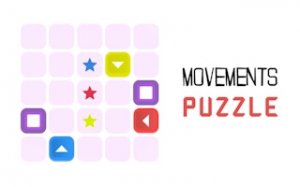
Dot Alignment Logic Puzzle asks you to match every colored dot with its corresponding colored square. The challenge comes from a three-phase structure. First, you move a square to a target position using a fixed number of steps. Then you choose to rotate the entire system either left or right, which shifts all dots in that direction. Finally, you verify that every dot sits on a matching square. One misaligned dot forces a restart, so precision matters more than speed.Why Limited Moves Matter
The move limit in Phase 1 is the game's main source of tension. You cannot wander or correct course freely; every step consumes a resource. This forces you to read the board before acting and to think about how your navigation will affect the rotation phase. The puzzle rewards planning over trial and error, and the restart rule makes each decision feel consequential.Design and Progression
The visual style is deliberately clean, with no timers, score multipliers, or decorative clutter. That focus keeps attention on the spatial relationships between dots and squares. Difficulty rises gradually, introducing new arrangements that demand sharper pattern recognition and more careful route planning. The result is a steady learning curve rather than a difficulty spike.Who This Puzzle Suits
Players who enjoy logic puzzles, spatial reasoning challenges, and games that respect their intelligence will find a focused mental workout here. It is not a twitch game or a story-driven experience. It is a pure puzzle about movement, limitation, and matching, best suited to those who like to think several steps ahead and learn from each failed attempt.Compatibility
✅ This game supports:
- Desktop browsers (Chrome, Edge, Safari)
- Mobile browsers (Chrome on Android, Safari on iOS)
❌ Does NOT support: - Internet Explorer - Very old browser versions
👉 Try refreshing or updating your browser
FAQ
Is Dot Alignment Logic Puzzle free to play?
The original description identifies it as a free online puzzle. It runs in a browser and does not require a download or purchase. That makes it easy to try without commitment, though the exact hosting platform and any optional extras are not specified in the available information.
What happens if I run out of moves in Phase 1?
The game gives you a limited number of moves to navigate the square to its target. If you exhaust them before reaching the correct position, you cannot proceed to a successful rotation. You must restart the level and plan a more efficient route. Conserving moves is central to solving each puzzle.
Does Dot Alignment Logic Puzzle have a time limit?
No time limit is mentioned in the game's description. The challenge comes from move limits and the rotation phase, not from a clock. You can study the board and plan your route without pressure. That design supports careful, deliberate thinking rather than fast reactions.
Can I undo a rotation in Phase 2?
The description presents the rotation as a single choice between left and right. It does not mention an undo option. If the rotation leaves any dot misaligned, the level restarts. That means you should predict the rotation's effect before committing, rather than expecting to reverse it afterward.
Is Dot Alignment Logic Puzzle suitable for children?
The game is a non-violent logic puzzle with colored dots and squares, so its theme is appropriate for a wide age range. However, the spatial reasoning and move planning may be challenging for very young children. Older kids and adults who enjoy brain teasers are the most likely audience.
How does the difficulty increase across levels?
The description states that progressive difficulty ensures a steady learning curve, with each level introducing new challenges. It does not specify the exact number of levels or the precise nature of each new twist. The increase appears to come from more complex dot arrangements and tighter move budgets.
Comments
Sign in to comment
You must be logged in before posting a review or rating.
No comments yet. Be the first to comment!




Editorial Notes